Seed Fund for Research Excellence
UK-Ukraine Higher Education Twinning Initiative
Purpose and design
Seed Funding for Research Excellence is the research strand of the UK-Ukraine Higher Education Twinning Initiative, managed by Cormack Consultancy Group (CCG). It awards competitive seed grants to twinned UK and Ukrainian universities, together with universities from other countries, so that they can test joint research ideas, produce first joint outputs and build working consortia. The programme was designed as a stepping stone: each funded partnership is expected to use its project as the basis for applications to major European programmes such as Horizon Europe and others.
Scale and funding
The call attracted 234 applications requesting a total of £6.6 million from partners in 30 countries, against an available budget of £540,000 and a maximum grant of £30,000. Demand exceeded available funding more than 12 times, and fewer than one in ten applications (about 9%) were selected. Ukrainian applicants came from all parts of the country, including frontline Kharkiv, Sumy and Zaporizhzhia. Around two-thirds of the funded projects involved three or more partners, including institutions from countries beyond the UK and Ukraine.
• 22 joint research projects selected and funded on a competitive basis.
• £581,000 allocated directly to projects, within a total programme investment of about £641,000 including administration.
• Open thematic scope: the call deliberately set no thematic restrictions, so that applicants could present their own ideas and the priorities they work on every day. Funded themes range from health and rehabilitation to environmental recovery, engineering and wartime housing markets. All applications were assessed by a panel made up equally of UK and Ukrainian experts. Because each expert understands the real conditions in their own country, the panel could judge every proposal from both perspectives, something a panel drawn from one country alone, without first-hand knowledge of the other context, could not do.
First results: Ukrainian universities coordinating Horizon Europe projects
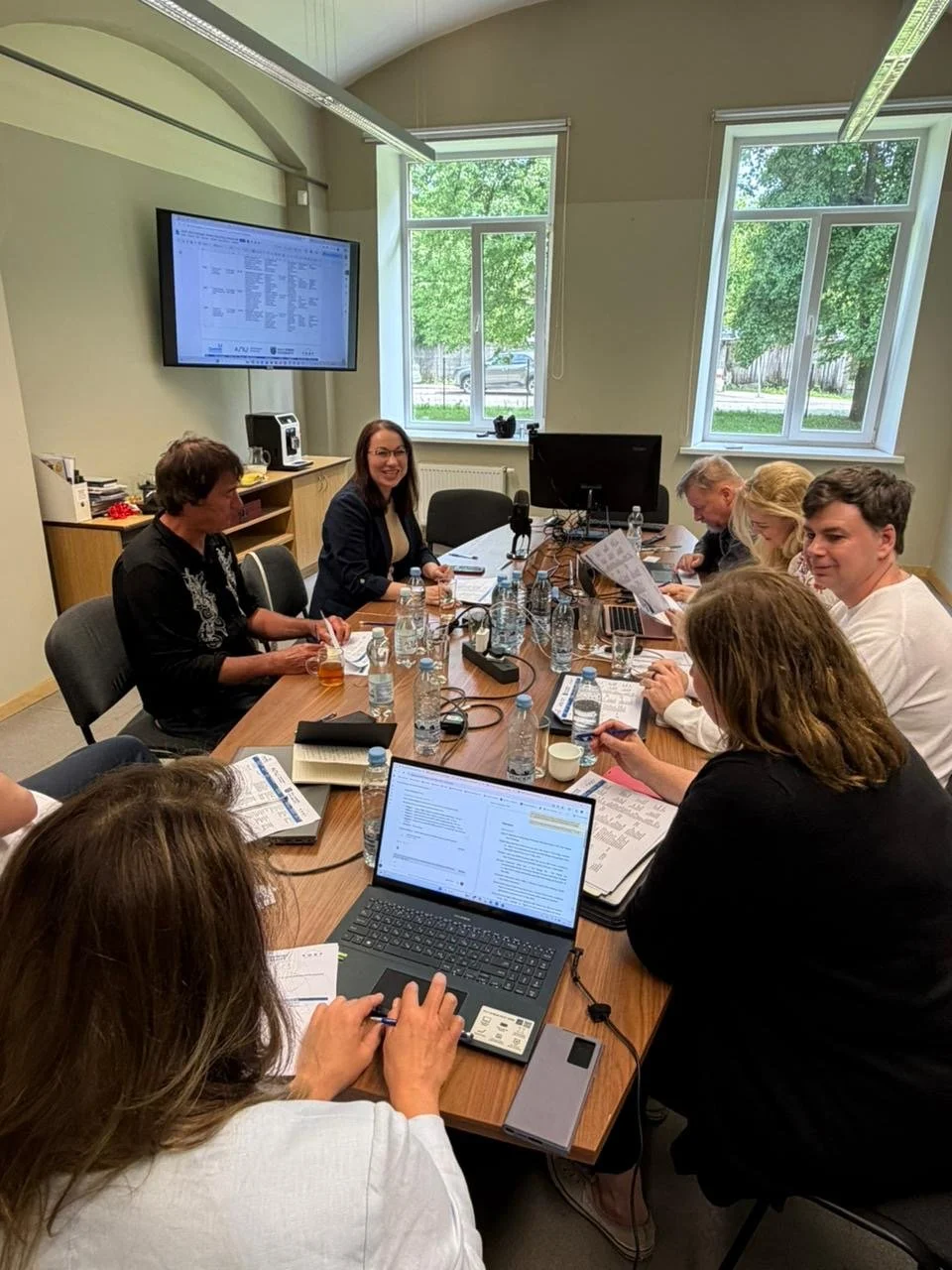
The first two partnerships to report have already won Horizon Europe funding. In both cases, a Ukrainian university is coordinating a Horizon Europe project for the first time:
ERA-PEACE (Empowering Research Area Capacities for Peace and Security) is coordinated by Alfred Nobel University with Coventry University (UK) and SYNYO GmbH (Austria). The project will strengthen research capacity in the field of peace and security. It received €1,299,999.
RESTART (Resilience and Excellence for Social Transformation and Adaptive Recovery in Turbulence) is coordinated by Sumy State University with the University of Liverpool (UK), the University of Zurich (Switzerland), the University of Tartu and the International Centre for Defence and Security (Estonia). The project will study social resilience and the adaptive recovery of society in times of crisis. It received €1,499,999.
Together, these awards bring in about €2.8 million, around 3.7 times the entire programme investment. Results from the remaining 20 partnerships are still coming in.
Face-to-face collaboration at the core
Mobility was built into every funded project and accounted for 20% to 50% of each project budget. The visits were short, typically one to two weeks, in line with the modest size of the grants. Their purpose was to give teams time together in person to work through joint ideas, agree the structure of future applications, discuss risks, and plan timelines and budgets. The programme did not fund internships, professional development courses or long-term mobility for staff or students.
Seed Funding for Research Excellence
Call statistics and programme profile
International reach
Applications came from partners in 30 countries. The United Kingdom accounted for about 170 applications (73%), while 64 applications (27%) were led by institutions from 29 other countries, including Poland (11), the United States, Italy, the Czech Republic and Latvia (5 each), Lithuania and Sweden (3 each). In total the call engaged 130 international lead institutions and 109 Ukrainian universities and research organisations. The funded portfolio includes lead partners from 7 countries: the UK, Switzerland, Greece, Italy, Poland, Argentina and Latvia.
Geographic coverage in Ukraine
Ukrainian applicants came from 15 cities: Kyiv (52), Kharkiv (30), Lviv (27), Dnipro (14), Ivano-Frankivsk (13), Poltava (13), Lutsk (12), Sumy (12), Odesa (11), Zaporizhzhia (6), Chernivtsi (5), Rivne (4), Nizhyn, Ostroh and Zhytomyr (3 each). Kharkiv, Sumy and Zaporizhzhia, cities under active shelling, submitted 48 applications between them.
UK university partners
Participating UK institutions range from the world's top-ranked universities to regionally embedded ones, including Oxford (#1 in the THE World University Rankings 2024), Imperial College London (#6), UCL (#22), Edinburgh (#30) and King's College London (#40). The most active applicants were the University of Birmingham (11 applications), the University of Edinburgh (7), and Loughborough, Newcastle, Brunel and Glasgow (6 each), followed by St Andrews (5). Russell Group, specialist and teaching-focused universities all took part.
Partnership structure and budgets
• 585 partner organisations were represented across all applications, split almost equally between Ukrainian and international institutions, and including business and civil society partners.
• Applications proposed on average 2.5 partners each, with some consortia reaching 7; 100 applications (43%) included partners beyond the two lead institutions.
• On average 51% of each requested budget was allocated to the Ukrainian side, showing genuinely joint projects rather than aid delivery.
• 131 applications (56%) requested the maximum £30,000. The average request was £28,409 across all applications
Thematic coverage
Applications covered all major thematic clusters: Education, Capacity and Human Capital (64 applications); Biomedical and Health Sciences (41); Energy, Environment and Circular Economy (39); Urban, Governance and Policy (39); Advanced Engineering, Materials and AI (33); Security, Defence and Resilience (9); and other clusters, including Culture and Heritage (9).
Selected projects have a clearly applied focus: rehabilitation, burns care, military traumatology, prosthetics and children's emotional self-regulation in wartime; inclusive higher education, mentoring and VR in maritime training; bioremediation of post-conflict soils, water-system recovery and reconstruction through BIM and digital twins; AI-based materials discovery; women in law enforcement, public sector leadership and wartime housing markets; and research on prehistoric Ukrainian megasites.